

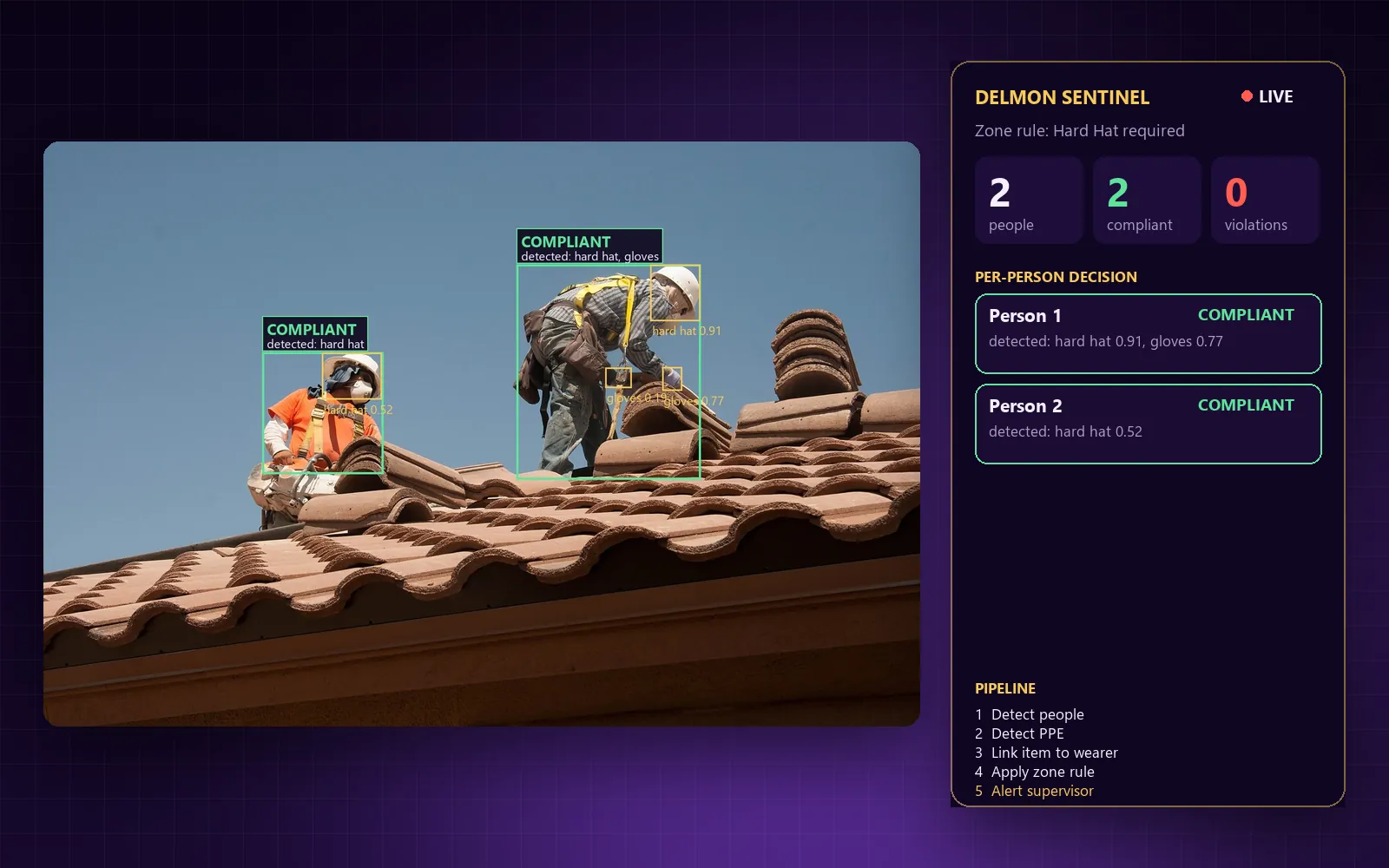
Actual detection results from the DELMON model on public domain industrial environment images, not client camera footage. Applied rule: Helmet is mandatory.
The camera sees. The system understands and acts.
Modern Camera Alone
- Video recording and viewing
- Limited built-in analytics: motion, line crossing, sometimes helmets
- Each camera operates in isolation
- General alerts that do not identify the zone, shift, or responsible person
DELMON System
- PPE detection for every individual, linking each item to the person
- Custom rules per zone and shift, measuring time spent in hazardous areas
- Unified system aggregating all cameras to form a complete site overview
- Escalation to the relevant supervisor, documented logs, measurable compliance reports, and integration with plant systems
A cement plant is a vast, heavy industrial site where shifts operate continuously among heavy machinery and high-risk areas. Safety monitoring traditionally relies on supervisors and manual review of recordings.
The safety team cannot monitor every camera at every moment; violations are discovered late or not at all, and there is no measurable data on compliance levels per zone or shift.
A PPE detection model running on existing camera feeds: it recognizes helmets, safety vests, and gloves, detects their absence, applies zone-specific rules, sends alerts to the relevant supervisor, and logs the event with images and timestamps in a dashboard and full audit trail.
Transitioning from manual review of recordings to continuous monitoring: every violation becomes a documented event for follow-up, with compliance metrics by zone and shift supporting safety management decisions.
AI on cameras, object detection models, integration with existing cameras, on-premise server analysis, zone/shift-specific rules, real-time alerts, and a dashboard with exportable reports.